About & methodology
How we pick what to cover, where every number comes from, and what happens when we get something wrong.
What we do
We cover business and marketing the way a good analyst would — with real numbers, not guesses. That covers the news of the week as well as the long case studies, and every story answers the same question: what actually happened, and what did it cost, earn or change?
We are not here to repeat press releases. We break down the decisions companies made, what those decisions cost or gained them, and what you can learn from it. If you want to know why a campaign flopped, how a competitor grew 40% in a quarter, or what a founder got right, this is where you will find the numbers behind the story — plus tools to test your own thinking against real cases.
How we verify every number
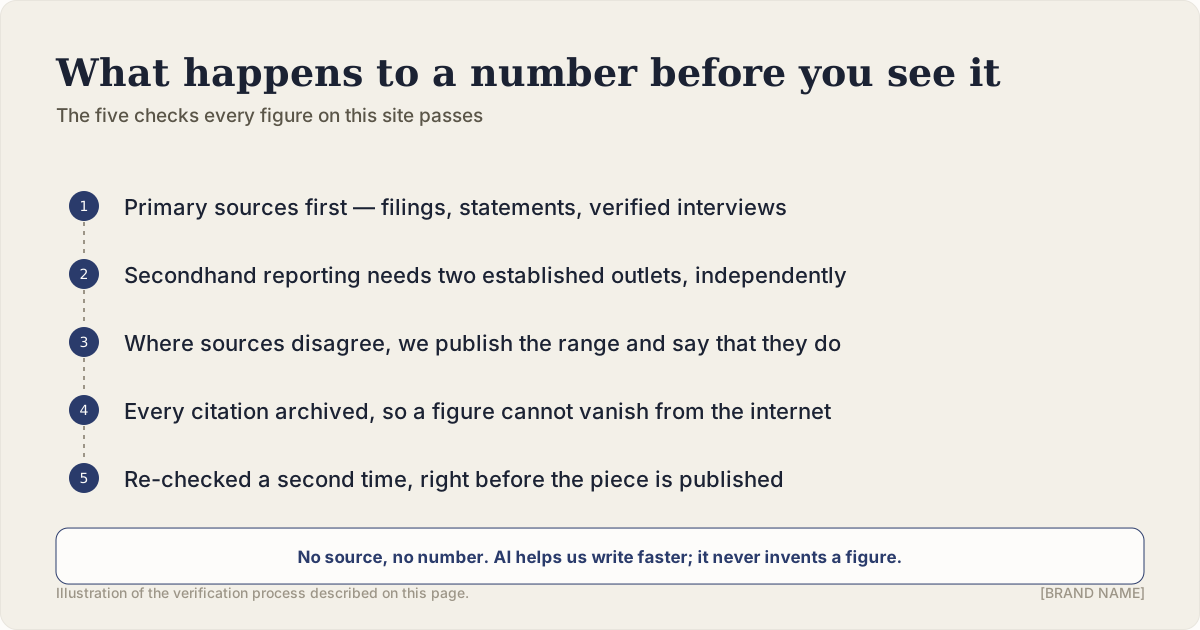
Every dollar figure and percentage on this site comes from a source you can check, not from an estimate we made up to sound convincing. Here is the standard we hold ourselves to:
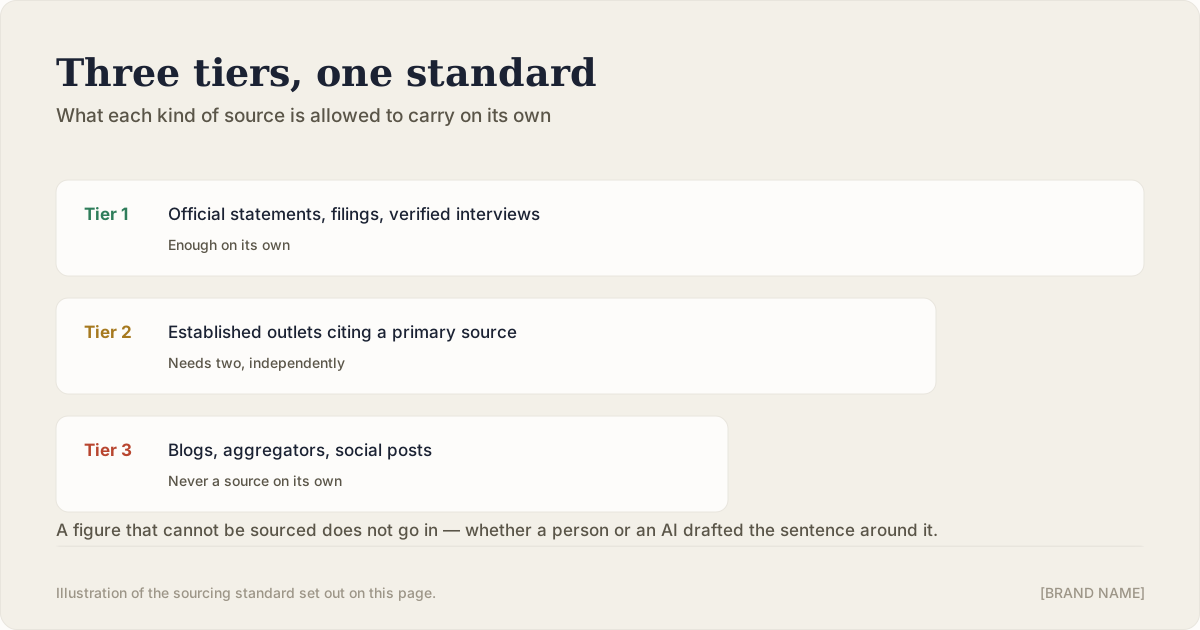
This applies whether a piece was drafted with AI assistance or not. AI helps us write faster; it never gets to invent a number. If a figure cannot be sourced, it does not go in the article — full stop.
Official statements, filings, verified interviews. Enough on its own.
Established outlets citing a primary source. Needs two, independently.
Blogs, aggregators, social posts. Never a source on its own.
Editorial independence
Some content on this site is sponsored — a company paid for coverage or a placement. When that happens, it is labelled clearly as Sponsored, right at the top, not buried in fine print.
Sponsorship never buys a better opinion. Our reader-sentiment ratings (Game Changer, Hot Deal, Overrated, Flop) stay switched on for sponsored content too, exactly as they do for everything else. What a company pays for is visibility — not the verdict.
When we get something wrong
We are covering real companies and real numbers, and sometimes new information comes out, or we make a mistake. When that happens:
Every report gets a human reading it, and corrections are usually made within a few days.
Who is behind this
[Short founder/team bio — one to two sentences on background and why this site exists. To be finalised before launch.]